Cartilage imaging
Our main focus is the use of advanced MRI technology to image cartilage degeneration. In partner with the Musculoskeletal and Quantitative Imaging Research (MQIR) center, we have investigated the ability to look at cartilage degeneration in a quantitative fashion. This advance technique can allow us to monitor progression of cartilage injuries, repair and success of knee ligament and meniscus surgeries. This research has been supported by the American Orthopaedic Society for Sports Medicine (AOSSM) cartilage initiative grant and National Institute of Health (NIH) grant.
Cartilage resurfacing
We are one of the leading centers in cartilage resurfacing procedures. Using quantitative MR imaging, we are able to monitor the success of different cartilage resurfacing procedures. These techniques have allowed us to measure the amount of proteoglycan within the articular cartilage. We are currently participating in a phase II clinical trial on a novel cartilage resurfacing procedure which holds significant promise for focal cartilage injuries.
Tendon-to-bone healing
The goal of this study is to improve the healing potential of tendon or ligament to bone following injury or surgery. Tendon and ligament surgeries are commonly performed in cruciate ligament reconstructions and rotator cuff repairs. We hypothesized that the use of growth factors can enhance the healing potential, leading to faster recovery and more predictable success following these injuries.
Dynamic MR imaging
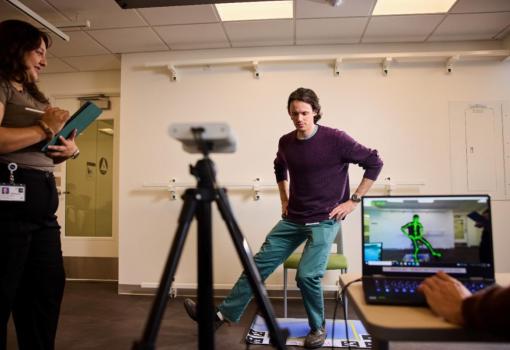
Dynamic MR imaging provides a 'dynamic' analysis of the joint under various conditions. Traditionally, MR images are static images that allow us to determine the changes in shape of various structures. Dynamic imaging allows us to evaluate the actual function of various structures during activities when patients are usually symptomatic. We can also use this technology to critically evaluate the success of ligament or tendon surgeries. We have received funding from the Orthopaedic Research Education Foundation (OREF) to study the effect of ACL reconstruction on knee motion
Rotator Cuff Repair
The goal of this study is to improve the current technique in rotator cuff repairs. Despite a high rate of patient satisfaction following surgery, repairs of the torn rotator cuff have been less encouraging when evaluated objectively. We are currently experimenting on new ways of rotator cuff repairs to improve the healing potential of the torn tendons. Our group has performed the initial double row fixation studies and is currently participating in the MOON (Multi-center Orthopaedic Outcomes Network) Shoulder study.